Politics for the state, economy for society (April 2026)
Author
Khalid Faris
1789 marked a historical and revolutionary transformation in the development of human relations in conjunction with politics and economy. The division between the “we” and the “I” captures the historical mismatch between politics and the economy. Culture exploits such division through the establishment of moral principles embedded in cults and sects that operation through the tribalization of politics and the economy.
Pre 1789, people were separated from society due to estate, corporation, guild and privilege domination, disconnecting the people from society. Marx argued that “The political revolution which overthrew this sovereign power and raised state affairs of the people, which constituted the political state as a matter of general concern, that is, as a real state, necessarily smashed all estates, corporations, guilds and privileges, since they were all manifestations of the separation of the people from the community. The political revolution thereby abolished the political character of civil society.” [1]
The consequence is a civil society of individuals separated according to their freedom in participating in society, hence society is a symbol of freedom as such. In the new society, the “I” inhabited the history of free individuals in and of itself; the material glue of free individuals is free labor and private property.
The emerging state becomes the public affairs of the people; its form is a political state. Its glue is the people in civil society that detach themselves from political affairs or alienate themselves from politics and mind their free labor and private property. The state being the symbol of a nation drives public affairs in either of two ways 1) the state is dominating society rendering it with no collective power or 2) the state adopts social politics in the form of identity politics or by expanding civil rights etc. In the former, we see the “we” in the “state first”, where people adopt a hands-off approach and delegate the state to handle politics according to how the end justifies the means, i.e. moralizing politics and national-centric politics. The latter, the “we” tends to be internationalists where politics is a joint effort and cooperation without dissolving the supremacy of the nation state in any arrangement whatsoever. Capital accumulation is a decisive factor in preserving the nation-state’s supremacy and the sublation of the revolutionary society’s fading away.
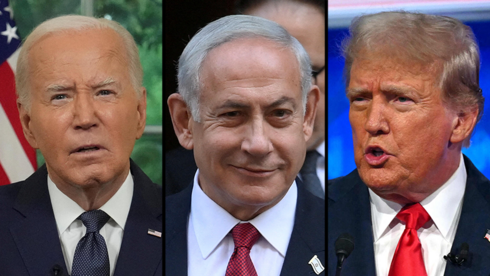
Citizens in the former are therefore nationalist cogs in the state whilst in the latter, an identity cog. Both are forms of nation state ideologies because politics has no material foundations under their control in the society where they live and rear. Thus, state politics is a culture of relative isolationism rooted in exceptionalism. Elected state leaders such as Donald Trump characterize politics as an ideological sphere which appears to us at the surface in the form of populism. He redefined or reset America as a state: “The distinctively American populism Trump espouses is rooted in the thought and culture of the country’s first populist president, Andrew Jackson. For Jacksonians – who formed the core of Trump’s passionately supportive base – the United States is not a political entity created and defined by a set of intellectual propositions rooted in the Enlightenment and oriented towards the fulfillment of a universal mission. Rather, it is the nation-state of the American people and its chief business lies at home. Jacksonians see American exceptionalism not as a function of the universal appeal of American ideas, or even as a function of a unique American vocation to transform the world, by rather as rooted in the country’s singular commitment to the equality and dignity of individual American citizens.” [2]
Political liberation is removed from the political agenda of the big power nation-state. This is mainly because the world order cannot afford a change coming from revolutionary societies; change must be subject to existing nation states. Liberal nation-states think the world must pursue change through individual-centric civil society. Revolutionary movements for liberation from occupation, like the Palestinian liberation from “Israelism” occupation, or to achieve an independent nation-state, or a democratic revolution across the Middle East or even a social movement in the West are deemed a failure due to the hegemonic power structure in the world. The paradigm of change is seen as legitimate and possible from western liberal states when a political economy prescribes ideas like the catastrophic IMF’s adjustments program that occurred at the end of the eighties in the twentieth century during the era of Ronald Reagan and Margaret Thatcher; their end goal was to copy the model of an alienated from politics citizens structure found in the West and replicate it in the East. This resulted in a wider damage to the fragile fabric of societies and ended the existence of the real forces of change.
People in the west being civil society members as citizens are less integrated with politics where they elect their leaders to serve their civil cause while overriding the political rights outside the national boundary. The legitimacy of political action by Donald Trump or before him in which international law is violated, dollarization of the human affairs to serve the purpose of American citizens, the militarization of diplomacy, the veto in the United Nations to protect Israel in freely committing genocide of the Palestinian people and reproducing the occupation, protecting world criminals (Benjamin “Bibi” Netanyahu) and supporting their policies, exploitation of wealth of other nations through controlling the destiny of energy resources and determining its trajectory, and moralizing politics are just some historical examples where its causes are traced to an alienation from politics with western citizens.
The historical political liberation failure manifests itself in the cultural parasitism to justify the egoism of the civil society as well as state nationalism politics. Part of this cultural parasitism is left and right party ideology, where they find themselves in conflict with their citizenship and their liberation destiny. It’s a global phenomenon not confined to the western world; however, its center of gravity in the western liberal nation state and civil society is apparent as they accept the terms to end self-determination under occupation or curb democratic revolution as we witness the full support and enable a system of dictatorships in the Middle East through western liberal nation states; the peak of it is the support and the act of being a custodian of an occupation and genocide that evolved in the beginning of the twentieth century from a grassroot Israeli politics into a later significant live-broadcasted genocide.
Nation state supremacy and capital accumulate not only logical conjunction, but material dialectics where a bourgeois historical block rendering “ought from is” (Hume) or “ought entail can” (Kant), meaning that freedom for them is a pearl of ultimate or super wisdom, whilst when we read Marx’s project, it realizes freedom evolves amid complexities or society’s realities; it is a development of each individual and people’s power, potential and necessity people’s class objectification instead of class in people.
The bourgeoisie is the only class where political affairs are rooted in society, i.e., it has a material base, unlike individual citizens who, as individuals, cannot rest on their material basis for being political; reality detaches them from one another and from what is beyond elections. Politics can only be directed if it has roots in society, where people are empowered to make their own political choices, at least to a bare minimum, without undermining democratic principles from within and beyond the nation-state. It is not conceivable for democratic citizens to accept the terms of genocide and occupation for a better wage system.
The bourgeoisie direct politics by means of capital accumulation imperatives. They avail perfect capital and national labor mobility, which attracts people into believing that they are free to move from state to state to find better living conditions i.e. better wages. Individuals feel as though they are independent and free in their life, so why would they need to seek politics beyond election? This is a historical question that demarcates between receiving freedom (liberal nation state) and producing or developing freedom (socialist project).
While the system in the western world is granting people better living conditions, they tend to forget that such policies degenerate the living conditions from other societies; this manifests itself through the support of dictatorships and genocides [3] in Palestine by the occupation forces.
References
[1] Marx, Karl (1844). On The Jewish Question by [2] Karl Marx (marxists.org). accessed April 2023.
Walter Russell Mead (March/April 2017). The Jacksonian Revolt American Populism and the Liberal Order Walter Russell Mead. Foreign affairs.
[3] "People hold their position until the court of justice decide. While this seems fair, it's also anachronistic because an eclectic position towards international law is a liberal nation state phenomenon. However, it's not just the court decision that renders something genocide or not, as the court may consider only the evidence of intention, which is something debatable. It’s the whole story from 70+years of political genocide to the Palestinians before any liberation front established, culminating in massive killing with live broadcast, it’s the massive weaponization by the United States. Many sources speak of 100,000 tons of explosive material dropped over Gaza. It's billions of dollars in capital accumulation through a dollarization process that makes this possible. If we don’t call this genocide, and we want to call it quasi-genocide, the essence remains. "
Comments
Loading…